
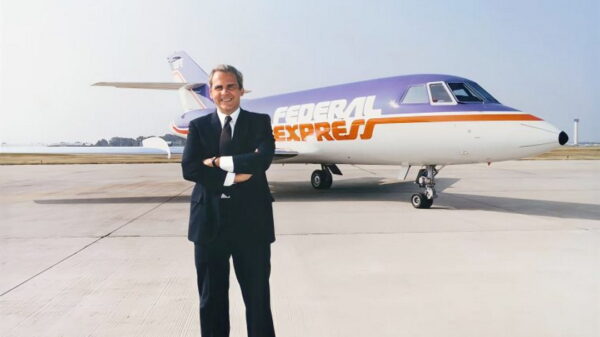









Every generation produces a few leaders who don’t just build companies — they build systems that permanently shift how society functions. Frederick W. Smith, the founder of FedEx, is one of those rare individuals. His story has always resonated with me, not because of the airplanes or the logistics wizardry, but because of the mindset behind it: the ability to see the invisible architecture of the future before anyone else believes it’s possible.
In 1965, while still an undergraduate at Yale, Smith wrote an economics paper that most professors dismissed as theoretical. He argued that as society became more automated, computers would only be valuable if they were dependable — and dependability required a new kind of logistics infrastructure. Businesses couldn’t run on technology that failed unpredictably. They needed a system that could repair, replace, and deliver with speed and certainty. The paper outlining the overnight delivery concept earned an C grade.
Smith wasn’t predicting a product. He was predicting a systemic inevitability. By1971, the world had caught up to his thesis. Computers were becoming essential, but delivery systems were still operating like it was 1950. Smith recognized that the future wouldn’t be built on point to point thinking. It required a hub and spoke network — a model that could scale, connect, and compound value exponentially.
And then he did something that separates visionaries from dreamers:
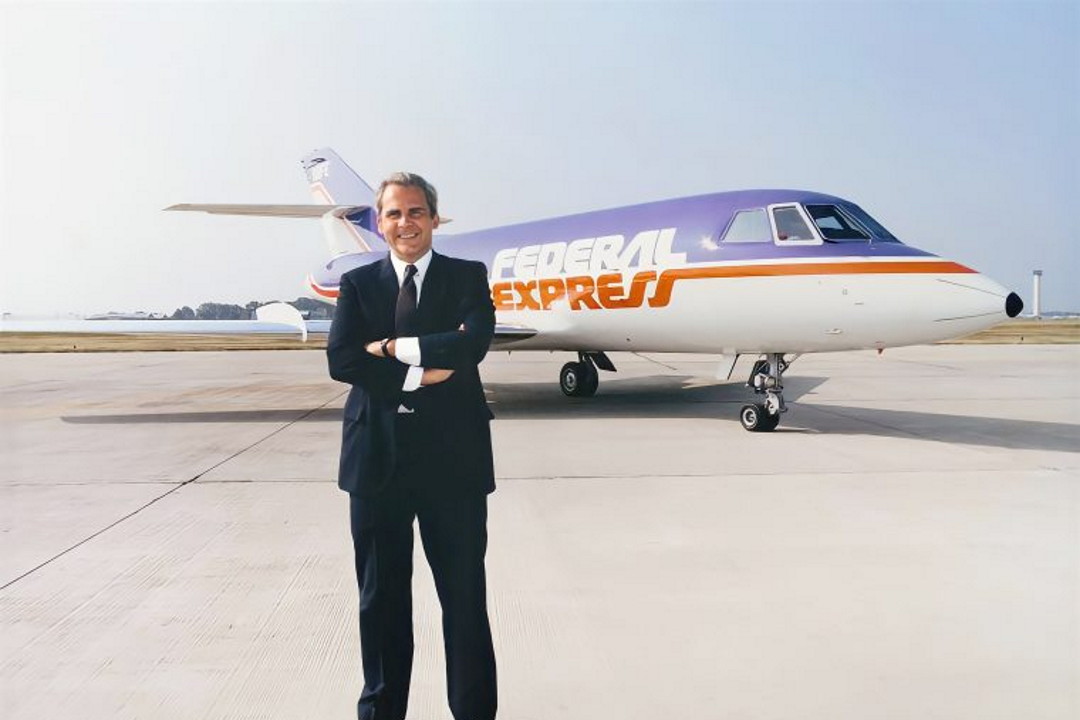
He built the entire system at once- At age 29, he launched Federal Express with his own capital. He tested a 25 city network by flying empty boxes across the country — not to prove the cargo, but to prove the system. He raised $90 million in venture capital, endured twenty six months of losses, and refused to compromise the architecture. Over the next decades, he layered in data transparency, estimated arrival times, and a relentless commitment to reliability. He acquired RPS to strengthen ground operations and positioned FedEx as the indispensable backbone of modern commerce. By the turn of the century, FedEx was worth an estimated $16 billion, operating 584 planes and 38,500 trucks. But the real achievement wasn’t the fleet. It was the infrastructure of trust that businesses came to rely on.
FedEx today is a $94B global logistics giant, nearly 5× larger than when Smith’s original hub and spoke vision matured in the early 2000s.
This Story Is Still Relevant Today
Smith’s story is more than entrepreneurial folklore. It’s a blueprint for anyone building systems that must operate at national scale — systems that touch communities, businesses, and institutions simultaneously.
It’s a reminder that:
- Vision is not enough. You must build the architecture that makes the vision inevitable.
- Scale requires structure. Point to point thinking collapses under national ambition.
- Trust is the product. Everything else is infrastructure.
- You cannot “start small” when the system itself must be whole to function.
These principles are as relevant today as they were in 1973 — perhaps even more so.
Read More: